
Real-Time Agent Guidance: How AI Helps Reps Mid-Call
What real-time agent guidance is, how AI suggests answers and next steps during a call, and the benefits it brings to contact center teams.
Every agent knows the moment: a frustrated customer sighs and says, “I already explained this to the last person.” That is a failure of the systems, not of the agent, and it costs time, trust and credibility.
When agents cannot instantly see a caller’s history, known issues or earlier resolutions, the conversation stalls. Searching through documents, CRM records and manuals wastes minutes, with a direct effect on productivity and customer satisfaction.
Real-time AI guidance tackles exactly this problem. It puts the right information in front of the agent before they say a word, and keeps supporting them until the call ends.
What real-time agent guidance is
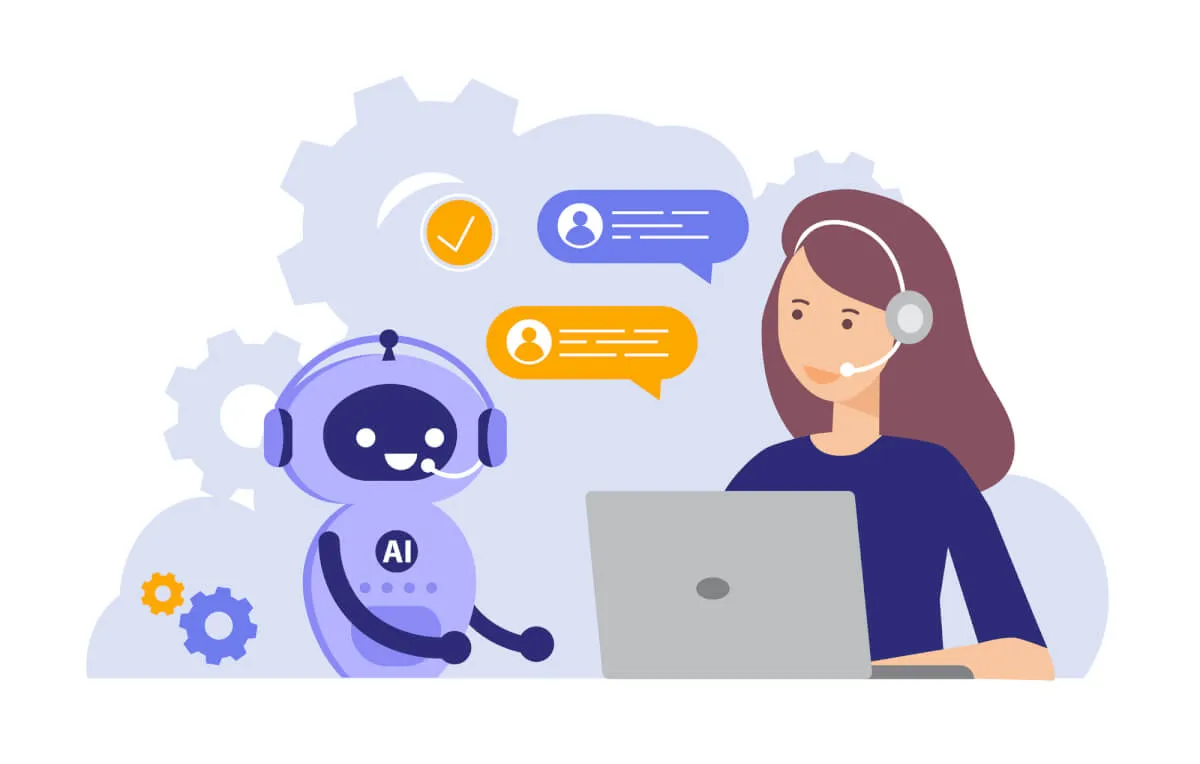
It is an AI layer that listens to the conversation as it happens and shows relevant suggestions on the agent’s screen. Instead of interrupting the customer to search the knowledge base or ask a colleague, the agent automatically receives answers, procedures and pointers to the next step.
Two technologies sit underneath:
- Real-time transcription: the agent focuses on the customer instead of taking notes.
- Natural language processing: it interprets the content, tone and sentiment of the conversation and turns them into concrete actions.
According to some industry research, automated information retrieval can reduce average handle time (AHT) by up to roughly 15%. Treat it as an order of magnitude rather than a promise: the result depends on how your knowledge base is organized and how your teams work.
How it works in EagleMercury Contact Center
In EagleMercury Contact Center, real-time guidance is part of the AI Advanced package, which includes everything in AI Standard plus real-time intelligence. The main capabilities are:
- Real-time transcription and insights of the conversation.
- AI Agent Assist: suggested answers and procedures during the call, with no tab switching and no putting the customer on hold.
- Automatic next-best-action suggestions, to steer the agent towards a faster, more accurate resolution.
- AI Recap at the end of the call: outcome, topics and next steps.
These sit alongside the AI Standard features: a summary of every call, the history of previous contacts, sentiment analysis and an AI knowledge base assistant. The agent never starts from zero: they see the context even if the customer chatted or called in the previous days.
Everything happens in the console agents already use for voice, email, chat, SMS and WhatsApp. One view instead of separate tools that fragment the experience.
Before the call: routing and context
Guidance starts before the agent picks up. With IVR and skills-based routing, calls reach the right person, and simple requests do not weigh on those handling complex cases.
When the call arrives, the agent already has a concise picture of earlier contacts. If the customer emailed on Monday and calls on Thursday, there is no need to repeat everything: the conversation picks up where it left off.
What changes for your teams
A concrete example: a customer calls because this month’s invoice is higher than usual. As they speak, the transcript appears on screen and the AI suggests explaining the prorated calculation for the two users added last week and sending the breakdown by email. At the end of the call, the automatic summary records the outcome and next steps.
The most visible benefits are:
- Shorter calls: fewer manual searches, less waiting, fewer transfers.
- Problems spotted early: sentiment analysis flags when the tone of the conversation worsens, before an irritated caller becomes a lost customer.
- More attentive agents: those who do not have to take notes listen better, and customers notice.
- More consistency: the same correct answers whatever the channel and whoever picks up.
- Faster onboarding: real-time suggestions support less experienced colleagues.
For quality over time, the optional AI Agent Evaluator automatically assesses interactions, while AI Interaction Insights identifies trends and recurring topics across contacts.
Why not wait
Agents without real-time support handle calls less efficiently, escalate more often and burn out sooner. Turnover has a real cost: recruiting, training and lost productivity. By contrast, customers served by well-supported agents tend to be more satisfied and more loyal.
One caveat: AI does not replace the agent. It suggests, summarizes and flags; the relationship with the customer stays human. That is why it is worth starting with a specific use case, such as first-line support or administrative assistance, and measuring the results.
For the full picture, see the AI features page and the dedicated Contact Center page. The guidance works with the cloud telephony of EagleMercury Elevate, so voice, chat and digital channels stay consistent.
In short
- Real-time guidance shows the agent answers, procedures and context while the call is in progress.
- In EagleMercury Contact Center it is included in the AI Advanced package, with AI Agent Assist, real-time transcription, next-best-action suggestions and AI Recap.
- It shortens handle time, spares customers from repeating themselves and improves the quality of every conversation.
Want to see how it would fit your contact center? Contact us through the form and we will come back with a tailored proposal.